Strategic Investment Sets the Stage for Growth
Amesect has taken a bold step toward reshaping the black soldier fly (BSF) farming industry in South Africa. In July 2025, DWA Investments joined forces with Amesect, investing R4.6 million for a 20% stake — valuing the company at R23 million.
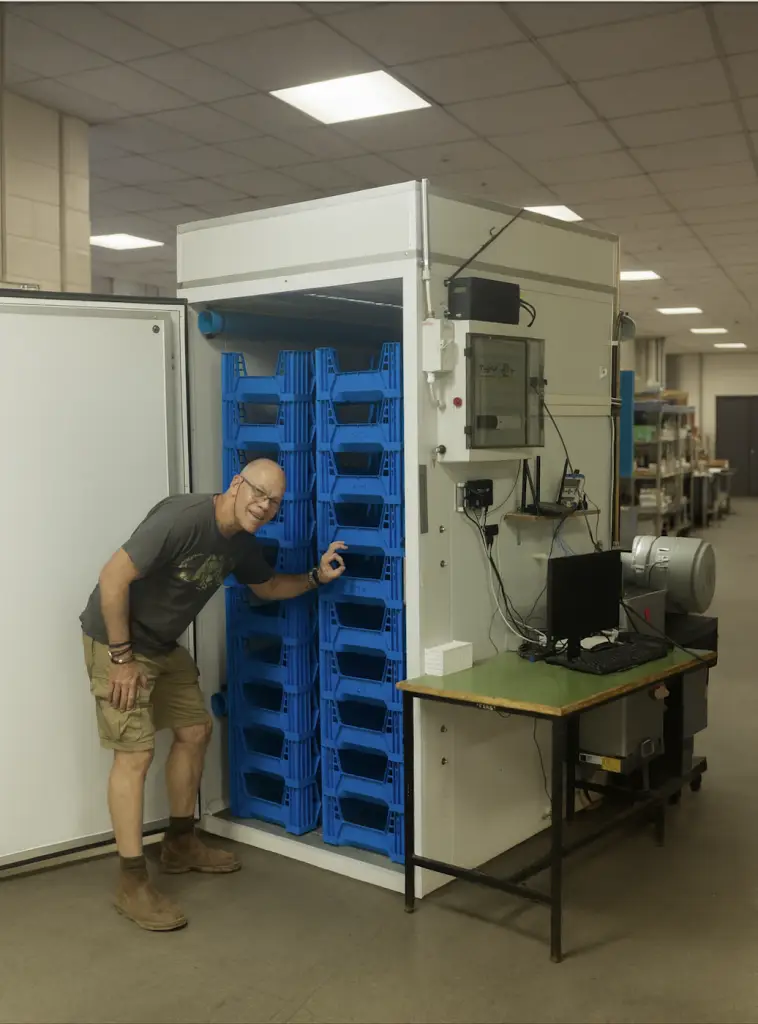
This partnership propels Amesect’s mission to prove the Micro Magic³ prototype, demonstrating the cost and environmental benefits of managing organic waste directly at the source. The approach offers a sustainable alternative to traditional centralized BSF farming models that depend on transporting waste to distant processing facilities.
Disrupting The Black Soldier Fly Industry with Decentralisation
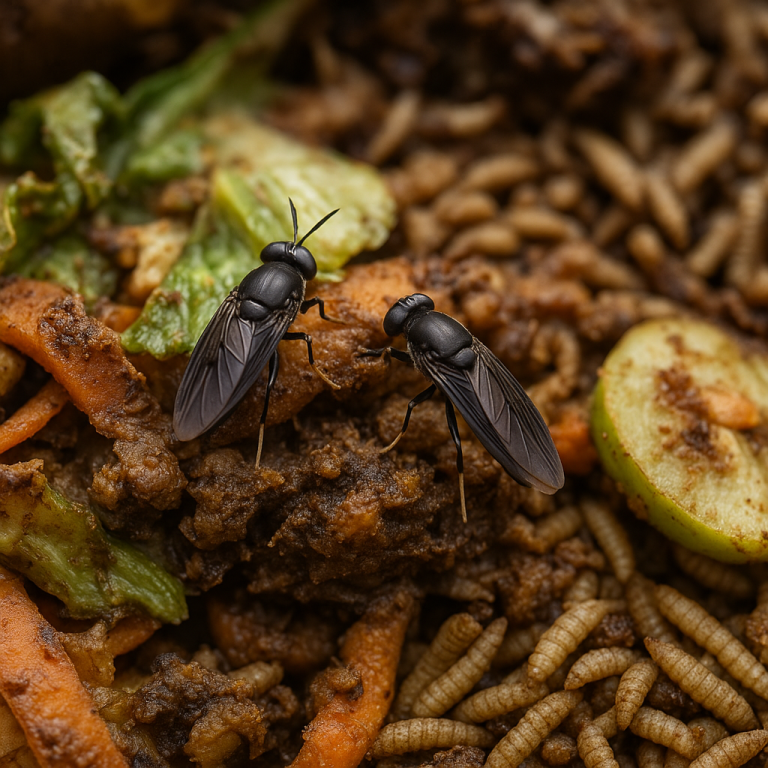
Most BSF producers in South Africa rely on large centralized, factory farming. Amesect is pioneering something different — a decentralized, modular system that brings mobile, climate-controlled processing units directly to the waste generator’s site.
By eliminating transport logistics, Amesect empowers businesses, restaurants, farms, and municipalities of all sizes to convert their organic waste into valuable products — reducing costs, cutting carbon emissions, and generating new revenue streams.
“The key to unlocking the potential of the black soldier fly industry lies in a viable decentralized approach,” explains Dave Stewart, responsible for business development at Amesect. “Margins in this sector are tight, so we must minimize production costs while maximizing product value. This investment gives us the runway to prove that model.”
– Dave Stewart, Business Development, Amesect
Amesect secures R4.3 million investment from DWA Investments to advance decentralized black soldier fly farming in South Africa. Discover how their Micro Magic³ system transforms organic waste into high-value products through sustainable, on-site processing.
Minimizing Costs, Maximizing Yield
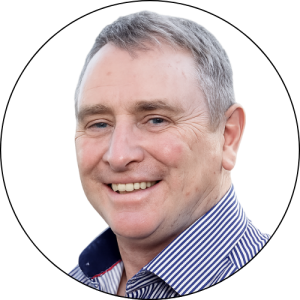
Behind the innovative Magic³ system is engineer Brendes Gresse, who has designed a new benchmark for efficiency in BSF production.
“We pack more larvae into every cubic meter than our competitors, shorten the harvest cycle, and ensure that the frass (residue) is perfectly conditioned for separation,” says Gresse. “Our patented separation technology — affectionately called Mobi Dick after the long struggle to perfect it — enables seamless, low-cost processing. Plus, our Magic³ units capture and reuse the larvae’s own heat energy to further reduce input costs.”
– Brendes Gresse, Lead Engineer, Amesect
The result? Higher yields, lower energy use, and a more sustainable production model — the core of Amesect’s strategy to make decentralized BSF farming commercially viable.
From Protein to Premium: Creating High-Value BSF Products
The next breakthrough lies in product development — transforming BSF larvae into high-value materials beyond conventional animal feed.
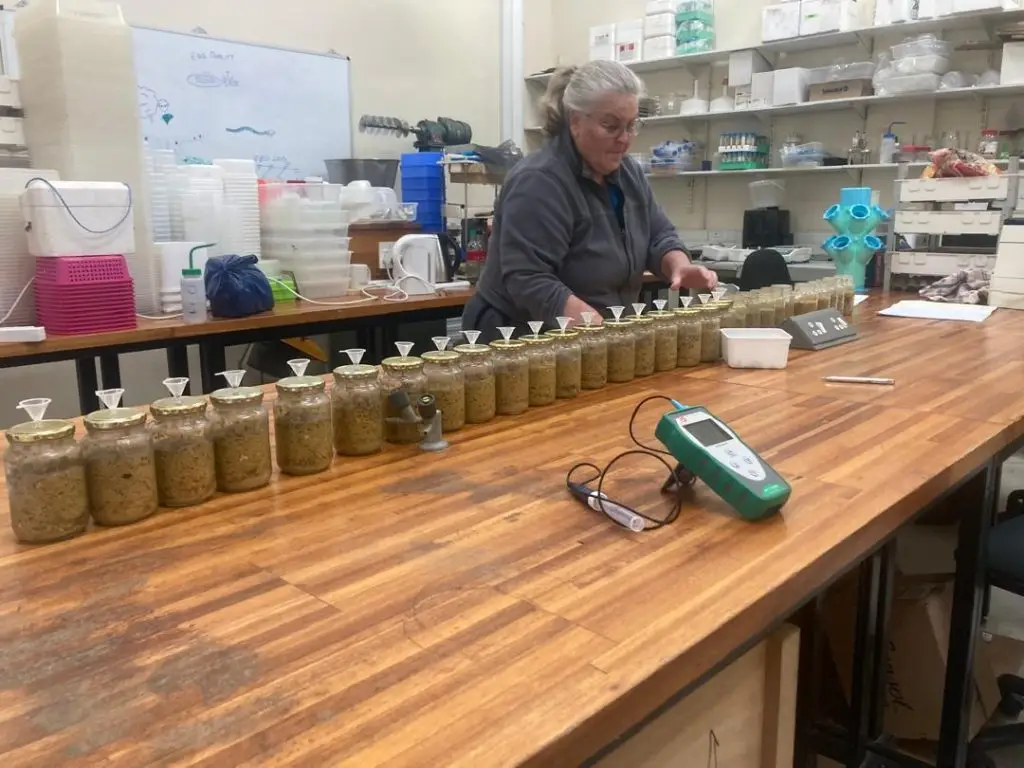
Dr. Elsje Pieterse, Amesect’s research and development lead, is driving innovation in this area.
“We’re looking beyond protein production,” she explains. “Our research is targeting high-value compounds for the pharmaceutical and cosmetic industries, where the true potential of BSF lies. We already have lab-scale proof of concept and are now preparing for pilot-scale production.”
– Dr. Elsje Pieterse, R&D, Amesect
For now, Amesect will validate the cost-benefit of the Magic³ system through proven BSF applications such as fish feed and organic fertilizer, while simultaneously developing the next generation of high-value bioproducts.
“Let’s just say there’s an innovative twist coming,” Dr. Pieterse adds with a smile.
Building a Circular Economy: Collaboration and Next Steps
Amesect is already demonstrating its model through a collaborative circular economy project with Grootbos Private Nature Reserve and Natimby, converting restaurant waste into BSF-based products. (Read more about this partnership here.)
“Our next goal is to scale up with our larger system — the Major Magic³ — to prove the benefits at industrial scale,” says Dave Stewart. “Once we demonstrate measurable cost savings and environmental impact, we’ll be ready for full manufacturing and nationwide rollout.”
With its investment from DWA, ongoing research and development, and a clear decentralized deployment strategy, Amesect is poised to lead the next evolution in black soldier fly farming and sustainable waste management across South Africa.
About DWA Investments
Dean Wetton Advisory (DWA) is a boutique, independent investment consultancy specializing in tailor-made, practical investment advice for institutions such as pension schemes, insurers, charities, and asset managers.
Founded and led by Dean Wetton (BComm (Hons), MBA, CFA), the firm brings deep expertise in manager research, risk assessment, ESG and climate-risk consulting, and governance capacity building.
DWA’s approach centers on aligning its interests with those of its clients, ensuring that any recommended solutions are both well-researched and operationally sustainable.
In investing directly in Amesect, DWA demonstrates its belief in impact-driven, scalable innovation in sustainable systems. This investment brings not only capital but also strategic insight, governance oversight, and a track record of excellence in guiding institutions through complex investment landscapes.
DWA has invested in Amesect with its own capital and not that of its clients.